Monday, January 27, 2014

Stuff I learned today: I'm really really tired

I am sacked, and tomorrow is a full day for us: 8 hours of class, quick dinner break, and then a nighttime mock rescue during which we're supposed to get the first rain we've had since our class began.  On Saturday we learned about altitude sickness, how to identify its different stages and the best treatment approach for each (the short answer: go down).  Bites and stings, including how to deal with poisonous critters.  (more myth busting: pretty much anything you've seen in a movie is outdated and no longer recommended.  You can't suck the poison out of bite, nor should to put a tourniquet on to isolate the poison. you just have to monitor and evacuate.)  We also covered lightning and submersion.   There's a guy in Canada doing really interesting studies on hypothermia and cold water accidents, and this was the most interesting tidbit from the day.  According to his findings (gathered from making himself and his willing students/participants intentionally hypothermic) there's a fairly universal rule for the timeline of cold water submersion, which they call the 1:10:1 rule.  If you fall into freezing water it generally takes 60 seconds for your body to recover from cold shock.  The best thing you can do is to just focus on getting control of your breathing during this time.  After that, you have about 10 minutes of "meaningful" movement before the cold begins to immobilize your muscles, regardless of how cold that water you fall into is.  And after this, you have about 1 hour during which you can stay conscious.  If, say, you fall through some ice, and you've used your 10 minutes of movement with no success, the best thing you can do is to try to get your arms to freeze to the surface so that if you lose consciousness your airway will remain above water and someone can still find and rescue you.  We also learned that if you do drown, your chances of survival are much higher if you drown in cold water, because it slows down your body, which slows down your dying.  We read an article by a girl who was trapped underwater in a snowy stream for 66 minutes as a child and was successfully resuscitated.

Yesterday was our day off, and after napping all afternoon I get myself together to grab a drink with some folks from our class.  Most people don't live in Portland, and it's been fun to show some of them around a little bit and recommend places for them to check out.  One day of brain recovery time wasn't really enough, and I'm glad today was some easy to digest information.  Today we did cardiovascular and respiratory medical issues, as well as CPR training.  We spent a lot of time with the CPR... although it's conceptually quite simple we spent a lot of time practicing to develop the muscle memory and rhythm of it.  There are some well known songs with a tempo of 100 beats per minute, which is the rate of chest compressions for CPR.  One of them is "Stayin' Alive" and another "Another One Bites the Dust".... like I said they have a good sense of lightness in this class.  Also learned how to use a defibrillator (modern ones are placed everywhere, and the machine literally talks you through the process.)  I was interested to learn that King County (Seattle) has a roughly 50% success rate in CPR, whereas the national average is somewhere between 10-15%.  Apparently it's a combination of having a population that is better educated in CPR, and having the money to have more defibrillators placed around and faster EMS response.  As heart disease is the leading cause of death our country, it makes you wonder what a populace better educated in how to handle a heart attack might be able to do for our national life expectancy.

Oh, and I learned how to remove a fish hook if someone gets it caught in their skin.

Don't think I'll make it onto the blog tomorrow, as I've been told our mock rescue could run as late as midnight.  I'll catch up in a couple of day... wish me luck and calm!

Friday, January 24, 2014

Frostbite and Fake Blood

After the long day yesterday today felt like a breeze, especially because the material we covered was a little more strait forward, at least for me.  Today we covered wound management, which included some pretty gnarly stuff, like how to control an impaled object that you can't remove from your patient, and how to treat an amputation.  We're lucky to have really awesome instructors for our course, who have the ability to inject some comic relief into our interactions without losing the weight of the situations we're talking about.  Case and point, Lisa referred to the fake finger that popped off of her patient's hand as "little patient."  As in, "we want to take care of big patient, but I can't forget about little patient over here either."  Unlike many things, this was pretty in line with my media experiences.  Clean that little patient and place it in some sterile, damp gauze in a ziplock baggie and keep it cool.

After wounds and lunch (what a combination for one's morning) we got on to environmental issues: heat exhaustion/stroke, dehydration, hyponatremia (low sodium, usually caused by over hydration), hypothermia, frostbite, and non-freezing cold injury (also known as trench-foot).  This section was also fairly familiar to me, although we did some interesting myth busting.  Getting into a sleeping bag naked with a hypothermic patient won't do any harm, and might help them feel more comfortable, but isn't going to be especially helpful in raising their core temperature.  Waiting to pee doesn't make you colder, and you don't lose more heat from your head than from an equivalent sized surface elsewhere on your body. With environmental risks, the focus is definitely on prevention, although treatment is obviously thoroughly covered as well.

I can't tell you how unexpectedly fun this class has been.  Pretending to be a patient (which I did twice today) is a blast, and I finally get to utilize the skills from that acting class I took in college.  Today I suffered a head wound, broke my wrist, and had some internal bleeding!  Even more amusing is watching the reactions to the regular folks walking their dogs through the park, wondering what 10 of us are doing splayed out in the grass with fake blood on our heads while the other 20 crouch over us.

Tomorrow is the last day before our one day weekend, so maybe on Sunday I'll have time to say more about the experience, rather than just the curriculum, of this class.  For now, suffice to say these have been some of the most interesting, affirming, and fun days in recent memory.

Thursday, January 23, 2014

I know something EMTs don't know, nanananana....

Today was very cool, because we began by learning something the urban first responders and even EMTs are not trained in, which is Focused Spinal Assessment.  The reason that emergency workers in urban settings don't have this skill is that if they have a patient with a potential spinal cord injury they can call an ambulance and get them to a hospital in a "spine safe" manner, where an ER doctor will do an FSA.  In the backcountry, transporting someone in a spine safe manner means strapping them to a backboard and carrying them out in a litter or having them evacuated by helicopter.  So if we can determine that it's safe for someone to walk out it's usually better, and might even be essential for getting them help for their other injuries in a timely manner.  If you're thorough, it's actually not very difficult or complicated.

Another cool thing we learned today that is usually only done by doctors is how to reduce (reset) some dislocated joints.  We're not going to mess with elbows, hips, or the knuckles at the base of your fingers or toes, but if you've dislocated a digit, patella (kneecap), shoulder, or jaw, and we're really really far from a hospital, I can help you!  When you dislocate a joint, the muscles surrounding it spasm and hold it in its dislocated position.  To get it back in place, we use traction (pulling) directly away from the joint in the position in which it was presented and allow the muscles to fatigue.  For a shoulder, this is often enough itself.  Digits have bumps at the joints, and so we have to gently pull the dislocated portion up around the other side of the knuckle so that it can slide back into place.

We also learned about how to assess and treat head wounds, and how to splint a boatload of fractures.  Splinting was perhaps the most fun project so far, as it involved a lot of creative arts and crafts time.  A foundation of this that I found particularly interesting is that padding + compression = rigidity.  You don't need a stick or anything rigid to properly splint someone, you just need to pad all around the area well (to avoid direct pressure and for comfort) and wrap it snugly and thoroughly with an ace bandage, t-shirt, etc.  So we spent a lot of time practicing with our own gear, and talking about different ways to improvise.  The most elaborate project in this was to construct a splint for a mid-shaft femur fracture, where traction is used to reduce pressure at the site of the fracture, therefor alleviating a lot of pain.  I tried to explain this in words just now, and failed miserably.  Wound up with a sentence the began "basically" and then ran for 5 lines.  This is worth a thousand words, I think.

Today was our 12 (or 13) hour day, so goodnight!

Wednesday, January 22, 2014

"Stuff I Learned Today"

I have a problem with this blog that's probably more analogous to my life than I would like to admit, and it's this: I get busy and fall behind on the posts that I want to make, and then when new things happen I don't post about them because I want a chance to "catch up." The stuff of my life builds up and suddenly I'm waiting to tell you abut my day until I can fill you in on everything that's happened since October. In the spirit of breaking this cycle, I'm introducing an new feature, for a limited time, called "Stuff I Learned Today." This and next week Seth and I are enrolled in a Wilderness First Responder course, meaning that we're being trained as medical first responders with specific training for backcountry/extended care scenarios.

Our first class was yesterday, and runs for nine days total: seven 8 hour days and two 12 hour days, including a mock rescue out in the woods somewhere. So, for my own review and your amusement, here's some stuff I learned:

Yesterday:

The medical community loves acronyms. It's not just because they make you sound smarter than the guy next to you; I can now give a rundown of a patient's condition in about 30 seconds in shorthand, whereas it might take several minutes to communicate in plain language. I'll use some of it while I tell you what else I learned, and you'll get a sense of how few full words we use.

Day one basically tackled this question: What do I do when I encounter someone in need of medical attention? Before you even approach the situation you need to: try to guess the MOI (mechanism of injury) and determine if its safe for you to approach/be there, pull on your gloves to protect yourself from fluids, determine if there are other injured persons and who needs your help most urgently, and get a general sense of the severity of the injury (ie does it appear to be life threatening?). This should take less than 10 seconds or so.

Once you approach a person and identify yourself, basically the first thing you do is to grab their head. This isn't always the case; if someone twisted their ankle and is sitting on a log you won't go up and squeeze their face, but if there's any chance that whatever happened to this person could have injured their spine, you're going to stabilize their head until you can rule it out as a possibility. Breathing and circulation are the first concerns, so we check to make sure their airways are clear and that they can take a deep breath without pain, we find their pulse and do a head to toe sweep for any major bleeding. After we make sure that our patient is breathing a circulating blood adequately, we're back to the spine. We're going to ask them about what happened (if we can), and from the MOI determine if they could have injured their spine. If there's any possibility of this, someone is going to hold the patient's head until we can stabilize it on a backboard, on which they will be evacuated. Once you make the decision that spinal damage is a possibility, evacuation is non-optional.

We'll then do a head to toe exam, looking for any other injuries that might be in need of immediate attention. We'll also check CSM (circulation, sensation, and mobility in the hands and feet) during the exam. Once we've dealt with these, it's time to take vitals. Prepare for acronym madness! V/S (vital signs) are as follows:

LOR (Level of Responsiveness): This can be A+O (awake and oriented) at several levels, depending on how oriented/disoriented they are, V (responsive to verbal stimulus), P (responsive to pain stimulus) or U (unresponsive)

HR (Heart Rate) pretty self explanatory

RR (Respiratory Rate) also self explanatory, although I did learn that you don't tell someone when you're taking their RR, because they will often subconsciously alter their breathing. This explains why nurses often take your HR with your hand resting on your chest, and why it takes them a full minute to take it.

BP (Blood Pressure) You guys know this one too, although I didn't know how to take someone's BP before yesterday. We learned how to do it with a stethescope and without, by using someone's radial pulse (that's the one in your wrist).

SCTM (Skin Color Temperature Moisture) A healthy SCTM is PWD (pink, warm, and dry- pink being the inside of your lip or nailbed, somewhere where we're all pink, regardless of ethnicity). Skin that is PCC (pale, cool, and clammy) is less good.

Pupils- are hopefully PERRL (Pupils Equal Round and Reactive to Light) We note anything abnormal.

Temperature- usually for us this is N/T (not taken) in a backcountry scenario. Specific numbers are less important here than general impression.

After this we get a relevant patient history, document it all, and make an assessment and treatment/evacuation plan. Whew.

Today we learned more about assessing possible spinal injuries and moving a patient in a "spine safe" manner, including: how to roll someone on their side to do a physical examination/treat or dress the back by yourself, or with the aid of one or two additional people, how to move someone from an immediate danger if necessary, how to reposition someone into a stable/spine safe position alone or with help, and how to transfer someone onto a backboard or litter (stretcher) and safely carry them over a distance. That was before lunch.

After lunch we talked about shock, and maybe this was the biggest thing I learned today. Shock is one of those terms that I've heard a million and a half times, but of which I had very little understanding technically. Maybe you're in the same boat: my experiences with television and movies led me to believe that shock is some kind of reaction, physical/psychological, to extreme trauma. I associated it with the nervous system I think. But shock is simply this: a loss/lack of perfusion, or the flow of oxygenated blood to the body. Technically, everyone dies of shock. Heart attack? Loss of perfusion because your heart's not pumping. Car crash? Loss of blood, obvious. Die in your sleep when you're 110? Yup, that too. If you're heart and lungs stop working, that's shock. Shock is generally caused by a loss of liquids (blood, vomit, diarrhea, etc.), and always caused by a primary issue, whether it be trauma or simple dehydration. The best thing is to treat the cause, if possible, and to identify shock early and monitor a patient closely. It's quite nice how our body tells us what's going on inside of itself; when a person goes into shock they will experience a spike of adrenaline, because their brain is subconsciously aware that something is wrong. This will often cause a person to be anxious, elevate their heart rate, and make them PCC, which are the first signs we look for. At first their vitals will look pretty normal, but if shock progresses we'll probably see their HR elevate, but become weaker, their BP drop, their LOR will become more disoriented and their skin will become more PCC. These are immediate, get this person out of here asap kind of signs. Hopefully, we've already got a helicopter on the way if this is the case. As with many of the decisions we're being trained to make, how to deal with shock is super dependent on the MOI. If we know someone is in shock because they've lost a lot of blood, the decision for rapid evacuation is pretty quick. If someone is in shock because they got food poisoning and have been puking for two days, we might try to hydrate them and monitor them closely, watching for any changes in their vitals, especially their LOR.

Believe it or not, we also learned about chest traumas today, including broken/fractured ribs, flail chest (two or more ribs broken in two or more places) and pneumothorax/hemothorax (air or blood in the chest cavity that prevents the lungs from breathing properly. I now know how to sling someone for a single rib fracture (which, by the way, is all the hospital can do for you aside from the pain meds) and how to bind and transport someone with flail chest. Pneumothorax (also called collapsed lung) is another story: unless there's a hole in someone chest through which air is entering and I can plug it, I just need to get this person to a hospital, where they will punch a hole in the person's chest to release the air. Despite some folks having seen George Clooney do this in Three Kings, we were told that this one was outside of our level of training. Fair warning, if you click this link, be aware it's a little gory.

And that's what I'll leave you with, as I should have been in bed an hour ago. My brain is tired, and I'm not going to proofread this, so my apologies for any typos.. Join me tomorrow for another installment of "Stuff I Learned Today"!

Wednesday, October 16, 2013

North Before East


View Larger Map

Before we left to come back East Seth and I took a trip up to Washington to visit the Puget Sound (this time from the West side) and to see the Olympic Peninsula for the first time.  Our friend Lenny (who you'll remember from previous bloggings) has been working on a tall ship called the Adventuress this summer, which sails the Sound primarily doing educational trips, teaching kids about marine ecology, sailing, and all kinds of other good stuff.  Lenny sent me an email earlier in the summer inviting us to come for a sail on one of his "Friends and Family" days; as we've been meaning to explore the Peninsula since we moved out West, this was a great reason to make the trip now, as opposed to "soon," which is always when we say we'll go.  Our sail was on Labor Day, leaving out of Port Townsend, which was a fantastic little town to visit.  Because it's a good harbor, Port Townsend was settled fairly early, and thus has a lot of old, ornate Victorian architecture that I sometimes miss out here: brick row buildings with bay windows up top and shops and restaurants on the ground floor... all condensed into something like ten square blocks, perfect to check out in just a couple of days.  It's also a very sailing-centric town, home to two marinas and a wooden boat building school.  All of this, along with the salt in the air, infused the whole town with an old-world romance, playing against the rugged frontier feel of anything found this far West and so remote.

Seth's new board in our beautiful old hotel room

View out onto the water from our beautiful old hotel room


Lenny doing some awesomely precarious sail wrangling out on the bow 


The sail itself was superb: sunshine and plenty of wind, not to mention one of the most beautiful ships I've ever laid eyes on and a chance to hang out with a good friend that we haven't seen in a few months.  You can click here to see more photos of the Adventuress from their website, and here to read their history.  The short and sweet is this: she was built in Maine one hundred years ago this year; and since her owner was a yachtsman, the rigging is of that style, making her an interesting ship.  She was built for an Arctic voyage in search of a bowhead whale specimen, and onboard her maiden voyage was a naturalist upon whom Indiana Jones was later based.  She was later sailed to San Francisco, and as the Panama Canal was not at the time completed, the trip was made the long way, around the tip of South America.  Now she lives in the Sound, and is again getting the kind of constant maintenance that a boat like that needs.  We stayed in Port Townsend after the sail and were luckily able to grab a drink with Lenny after his duties were done for the night, and the next morning we hopped a ferry over to Whidbey Island.

Ferry crossing view out our windshield


View Larger Map

We camped at a small state park on the Northern part of the island; it was a little more private than the camping near the ferry terminal, which was completely filled up with fishermen in big RVs.  We hiked a trail that ran along the bluffs overlooking the beach and watched the sun set over the Strait of Juan de Fuca, the northern passage into the sound.  On our way back to the mainland the next morning we stopped in Coupeville for breakfast at a bakery on the water.  Not only did it turn out that our waitress had just returned from working the early summer season on the Adventuress, she had recommended Lenny for his position based on a mutual acquaintance (of all of ours) from Astoria, who had worked at said bakery last summer!

On our third night we camped at Lake Crescent, stopping along the way in Port Angeles to have lunch, and to check out another surprisingly cool little town on the edge of nowhere (and Canada).  Like Port Townsend, Port Angeles had a surprisingly large co-op grocery store, evidence of a decades old hippie migration and continued influence.  Port Townsend is also, as the name implies, an active Port; the Adventuress does some sails from there, and it is the American terminal for the Victoria Island Ferry.  Perhaps because of this, or perhaps just because its a very cool idea, the pub we had lunch at had a chalkboard behind the bar where they kept track of drinks, bought for friends and acquaintances in absentia that could be redeemed the next time said friend happened through.  It had "For" "From" and "What" columns, so a row might read "The Adventuress Crew" "Alyssa and Seth" "12 beers."  We didn't know if/when they would be through again this season, and so it didn't read that, but we thought about it...


View Larger Map

Crescent Lake was beautiful, a clear, piercing blue in color and too large to fully see from the campground, though we drove along the length of it on our way there.  I was really looking forward to taking a canoe or kayak out to explore it, but we had arrived just two days too late; the camp store and boat rental closed for the season on Labor Day.  We did meet some nice guys who had a spot right on the lake edge, and who were kind enough to share their beer and fire with us.  We turned in when they decided to go for a night swim, which neither of us could be convinced sounded like an appealing idea (don't think we'd had quite as much beer as they had).  The next morning we hit the road early, both of us itching to get to some water with waves.


View Larger Map

Neah Bay is one of the coolest places I've been as viewed on a map (zoom out above to see what I mean).  Being there feels much as you would imagine: on the tip of the edge of the world.  We went for a hike when we first got in, through thick old growth peppered everywhere with chantrelles.  After about half a mile we could hear the ocean; the trail continued to follow the water's edge closely, although further investigation always revealed a long steep slope down to whatever little beach or cove we were plodding above.  We were hoping to find a good spot for a sit and afternoon snack, and finally we found a (comparatively) inviting pathway down that someone had roped up.  We clamored down and enjoyed our own little private view while we ate, then headed back to find the campground.


The way back up; notice the rope on the right.
Our stay was one of the most pleasant car camping experiences I've had.  Most state parks try to recapture some sense of privacy while jamming in as many spaces as possible by leaving a narrow strip of bushes or trees between the sites, usually resulting in very little actual privacy, and no communal spaces for meeting other campers.  They're the suburbs of campgrounds.  Conversely, the Hobuck Camp Ground that we stayed at was run by the Makah Indian Reservation, which encompasses the whole of that little tip of the Peninsula.  They simply had an open grassy space, dotted with fire rings and separated from the beach by a narrow strip of dunes and sometimes trees.  We were free to camp anywhere we liked, and could have chosen a secluded spot in the trees (had we not been in the van) or on the edge of the campground away from other campers.  As it was we found a nice flat spot off to one side, but still fairly near to others.

Checking the surf
I've never met so many people at a campground before.  Many people were there to surf, which sparked most of the conversations that we had.  Seth's new board got some attention, being a fairly unique shape, and he even had to chance to loan it to someone with more experience and get some feedback ("like a skateboard on the water").  We met a couple of guys who were also there with some boards they had shaped themselves, one of whom lives in Portland and should be an awesome coast carpool friend.  While we met mostly people about our age, we had an especially good time sitting around the fire and chatting with a couple of older guys who were on a long motorcycle trip: up from Vancouver, WA (just across the river from Portland) across the ferries and islands, and then inland over a pass in the North Washington Cascades to ride back down to Vancouver on the east side of the range.  It's always cool to meet people who have been doing some of the activities that we love (backpacking, surfing, climbing) for decades, and to see where their lives have lead them.  One of them had kids still in school, and we talked about the difficulty of trying to raise kids with a certain intentionality.  I'm sure it's difficult in this era, when most folks let their kids disappear into their cell phones and video games, to try to instill a healthy balance of world experiences.   Milos said that while his kids love to spend time outdoors, he's always fighting the "keeping up with the Joneses" of what gadgets his kids friends have, and what their lifestyles are like.  Hell, its even hard to cultivate this healthily balance in oneself; modernity can be damn consuming if you let it, and you forget to stop and drink in the reality that is right there in front of you, not across the world represented on a screen.  It was extremely gratifying to connect with other people on that idea, because its what we were all there for: to spend time in a reality so captivating and complete that we blissfully forgot to think about the rest of the world for a little while.

Sunset view from atop the van

We were so enamored of being there that we stayed for the whole rest of our trip; there was another surf spot that we wanted to check out, but we just stopped to take a peek on our way back down to Portland.

The "other" surf spot, something for next time


Monday, October 7, 2013

Mainly Maine

I thought that maybe I would hide in my studio for a month when we got back from the East coast; for the first week of our trip I was loving seeing people everyday and having a super full schedule, but by the time we got to Maine I was starting to wear, and though I enjoyed my time there immensely it would have been even better had I had more energy, especially for socializing.  I was drained enough that I forgot the camera every time we left our friend's house, and consequently didn't take a single photo of our time there.  I suppose I'll have to use my words instead for a change.  We got in to Bar Harbor in the evening, after a 16 hour Greyhound trek from PA (note to self: do not repeat this experience).  Our friend Cali, who we had planned to stay with, was still at work and we were stinky and tired, so we checked into a hotel for the night.  After cleaning ourselves up we went to check out this restaurant, Eden, that was temporarily closed the year that we lived in Bar Harbor.  It's a vegan place, and I heard rave reviews from our vegetarian and meat eating friends alike, so I was pretty excited to try their food after a three year wait.  It was delicious, but in what has become a very familiar restaurant experience, the appetizer blew the entrees out of the water, and were I to go there again in the future I would skip entrees altogether, and just go for several appetizers and dessert (which was also phenomenal).  Dessert was a "peanut butter cup": chocolate mousse, peanut butter mousse, chocolate ganache, topped generously with something that most resembled peanut brittle, and was so damn good that we went back two night later just for dessert and coffee.  After dinner our first night we went back to the hotel and were asleep by 10.

The next morning we met up with Cali and moved over to her apartment.  We went down to the South end of the island with her and her new pup, Knox, to walk around Little Long Pond, which is entirely off leash okay and therefor the social hub for dogs on the island.  Cali had to work again in the evening, so Seth and I went for a bite to eat and posted up at the Lompoc, the bar in town most frequented by locals.  The night went pretty much as I had hoped: a good friend and former coworker of Sarah's was behind the bar, and a good friend of ours' whose number I had lost wandered in partway through the evening.  Phones are still somewhat obsolete on that island: many people don't even have them, and service is spotty at best for those who do.  It worked out quite well to just show up and hang out in the right places, waiting to see the people we were looking for.

Day three, we woke up and got breakfast at my former place of employment; said hello to couple of old friends there.  Then Seth, Cali, Knox and I set out for a hike.  Cali's boyfriend met up with us too, and we hiked a few miles together before they headed back to town so that Cali could get ready for work.  Seth and I devised a plan to hike the whole way back into town from where we were, which we did, rolling in just after dark and making a b-line for the burrito place.  After our eleven and a half mile hike, my burrito tasted like the best thing I had eaten in weeks.  We went and showered at Cali's before going back to Eden for the PB cup, which actually might have been the best thing I had eaten in weeks.

On Saturday we took it easy during the day.  Seth walked down to a quiet, rocky beach South of town and read for the afternoon while I went down to Somesville with Cali and her boyfriend to explore the harbor in his little boat.  That evening the four of us went out to dinner at the restaurant that Cali is currently working at, often regarded as "the best restaurant on the island."  They are especially known for their seafood, which we ate tons of.  Being with an employee carried some nice perks too:  we were brought an extra appetizer compliments of the chef, and then an extra entree as well, which had been prepared for another table erroneously.  I tried cuddlefish for the first time, which was really tasty.  More desserts, and thankfully coffee, as we headed to a party afterwards.  The party was lovely, down in one of the less populated towns on the island.  We ran into several people we were hoping to see, and enjoyed the last of the warmish weather around a backyard campfire.  On the way home we stopped and launched a Chinese lantern over the Sound, which more or less made the night perfect.

Sunday was our last day there.  We woke up and went to the farmer's market with Cali, where we got coffee and Thai food for breakfast, sat and ate on the bleachers while we watched Knox tear around the park.  I had hopes of getting in another hike but we went in search of a friend that we hadn't managed to see yet on our way and ended up spending the day checking out his new place.  This summer he's built himself a yurt on a platform constructed entirely of materials found or hewn on site on-site, cultivated a huge garden and flock of chickens, and built a cob oven and composting outhouse.  He was also in the process of making himself a hunting bow.  It was a wonderfully impressive and lovely existence to step into for the afternoon, and by the time we got back to town Seth and I were about sacked for the evening.  I tried to read but fell asleep within 20 minutes.

Next morning we had to catch the bus to Portland (ME) at 8.  We spent the night there, and had a really lovely time strolling around the historic district and waterfront, getting a bite to eat and a drink.  Had an early turn in again, as we had to wake up at four to catch our six am flight back to our Portland.

Upon our return, I managed to take a day off from people.  Then it was Sarah's birthday, which she and Andy spent here, and then they somehow convinced us to come to San Francisco for a few days with them, for Sarah's birthday trip.  As a matter of fact, it's about time for us to head downtown to meet them now.  We're taking the train down overnight and staying until Friday.  Someday I'll rest and get lost in my projects, but I couldn't pass on the opportunity to spend the week with Sarah in a fun new city; the four of us don't get to travel together often, and I'm really looking forward to it!


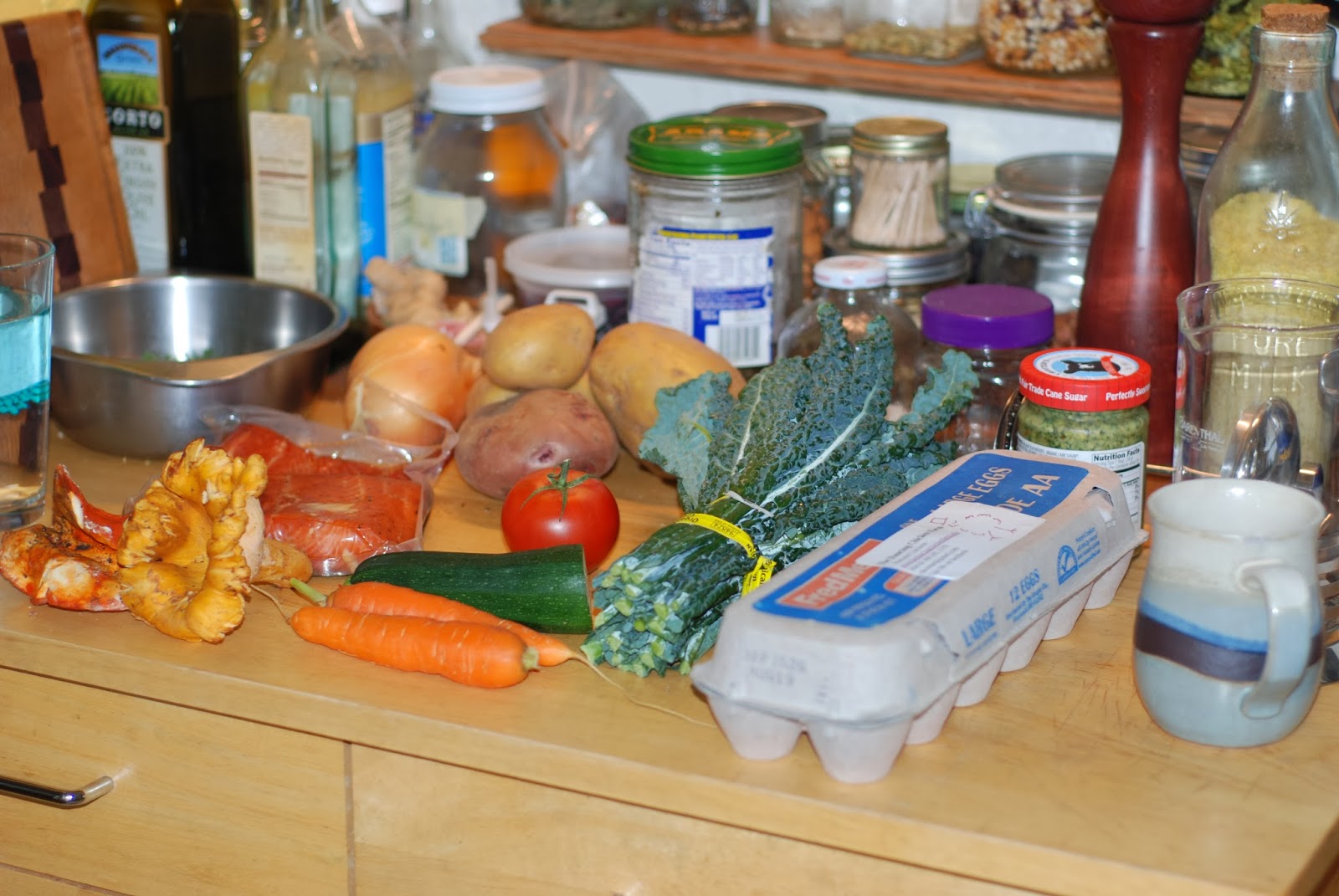
Sarah's birthday breakfast, prepared by chef Seth, before and after.  You're looking at a chanterelle mushroom, a lobster mushroom, smoked salmon, potatoes, zucchini, carrots, tomato, kale, pesto, and eggs... all cooked into this delicious hash:


Sunday, October 6, 2013

Eagle Creek

Started this post before our trip back East, but didn't get a chance to post it until now.  I was right about the weather; the NW greeted us with a downpour as we made our way home from the airport on Tuesday.


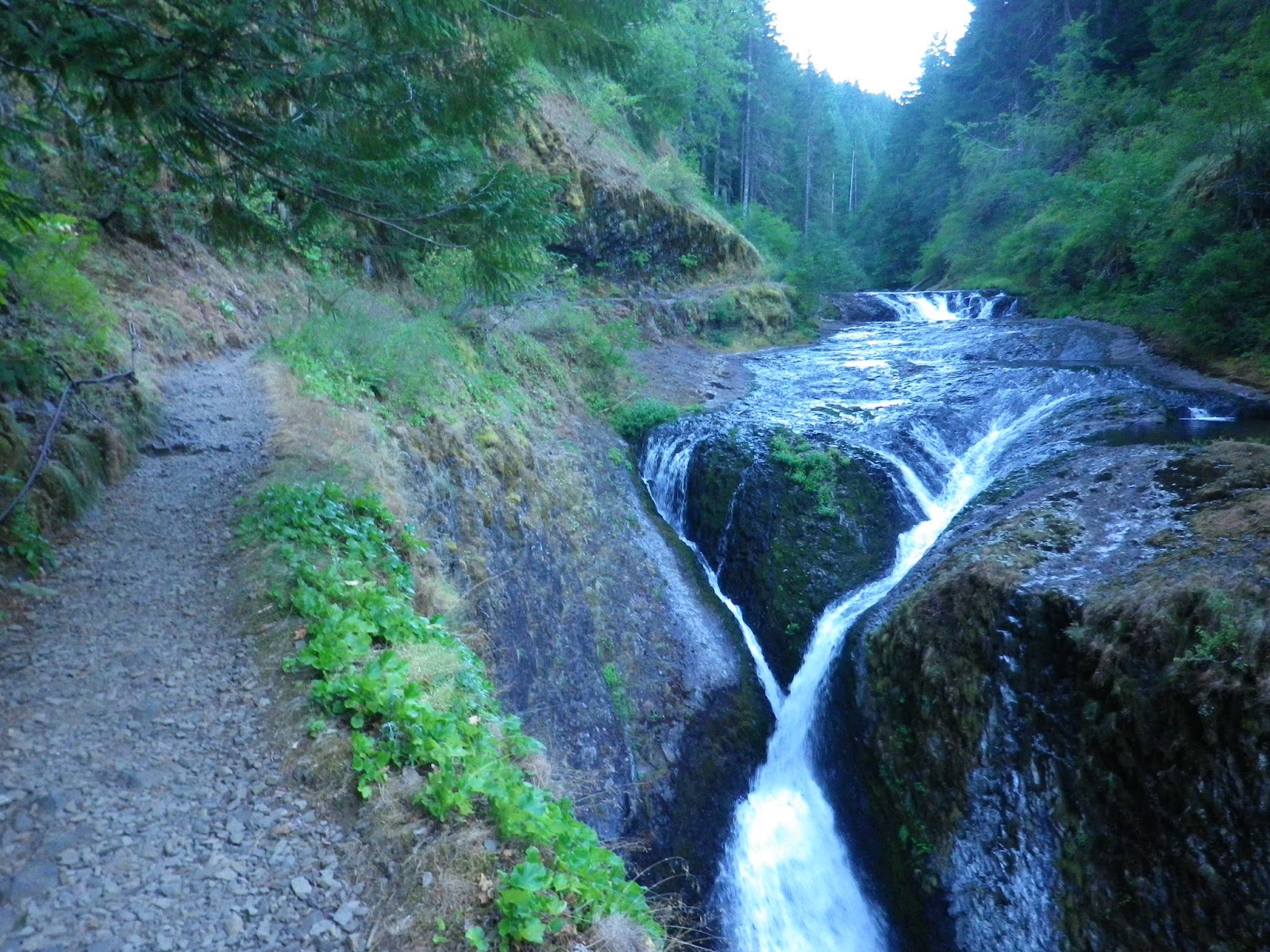
Summer is almost over.  We've seen the first rain that we've had in weeks the past few days, which is nice as I haven't had to water our garden all week.  Things will probably have taken an even more decisive turn by the time we return from the East coast at the end of September, so we're really trying to pack it in while we can.  Last week Seth and I went on a three day trip just East of Portland in the Columbia River Gorge.  It was nice and mellow climbing up into the hills from the river, and we passed so many waterfalls that I began to find them dull.


Yes, that is a tunnel behind a waterfall that I'm about to walk through.


Our campsite the first night


Wahtum Lake, our night number two camp destination.  It was a little brisk but we went for a swim here anyway.


There were forest fires burning about 40 miles up river (along the Columbia) from where we were, but the smoke made it all the way to us.  Definitely made hiking a little less pleasant and a little more strenuous, and contributed to our decision to hike the whole way out on the third day instead of camping a third night.  The last day we went through some cool landscapes: lots of rocky outcroppings in the woods and some beautiful exposed sections of trail where we got good sun, and then rain.